
Exosite · Sr. Product Design Manager (first UX hire) · 2016–2023
A dozen one-off builds. One platform. $1M a quarter.
- Problem
- Exosite created more than a dozen one-off proof-of-concept builds for more than a dozen enterprise clients, each on its own stack with its own idea of what a connected asset is. Each new deal started from scratch, engineering drowned, and sales kept signing.
- Solution
- One white-label platform that separates core function from the presentation layer, a consistent UX engine underneath with enough surface area on top that each client can make the product its own.
- Stack
- A ground-up, white-label Vue IoT platform with a code-based design system, deep configuration options, and advanced data visualization.
Exosite was running roughly a dozen proof-of-concepts for as many enterprise clients. Every new deal meant starting over. I joined as their first UX hire and helped turn that into a single white-label platform that landed in Gartner's Magic Quadrant five years running.

$1M+
quarterly recurring revenue
5×
Gartner Magic Quadrant years
The starting point
First day. Roughly a dozen separate IoT builds, a dozen different stacks, a dozen different mental models of what an IoT platform even is. Parker-Hannifin's looked nothing like Moen's. SleepNumber's workflows were incompatible with Toro's. Every new deal kicked off another round of starting from scratch. The engineering team was drowning and the sales team kept signing.
“Every new deal meant starting from scratch.”
The challenge
Find what was universal across 13 wildly different products. Build an architecture flexible enough to serve all of them without stripping out the things that made each client feel like the platform was theirs. The user set was a zoo. Factory floor techs in steel-toed boots. IoT product managers building roadmaps. OEM integration engineers writing firmware. C-suite dashboards at Parker-Hannifin across 11 divisions.
Discovery and synthesis
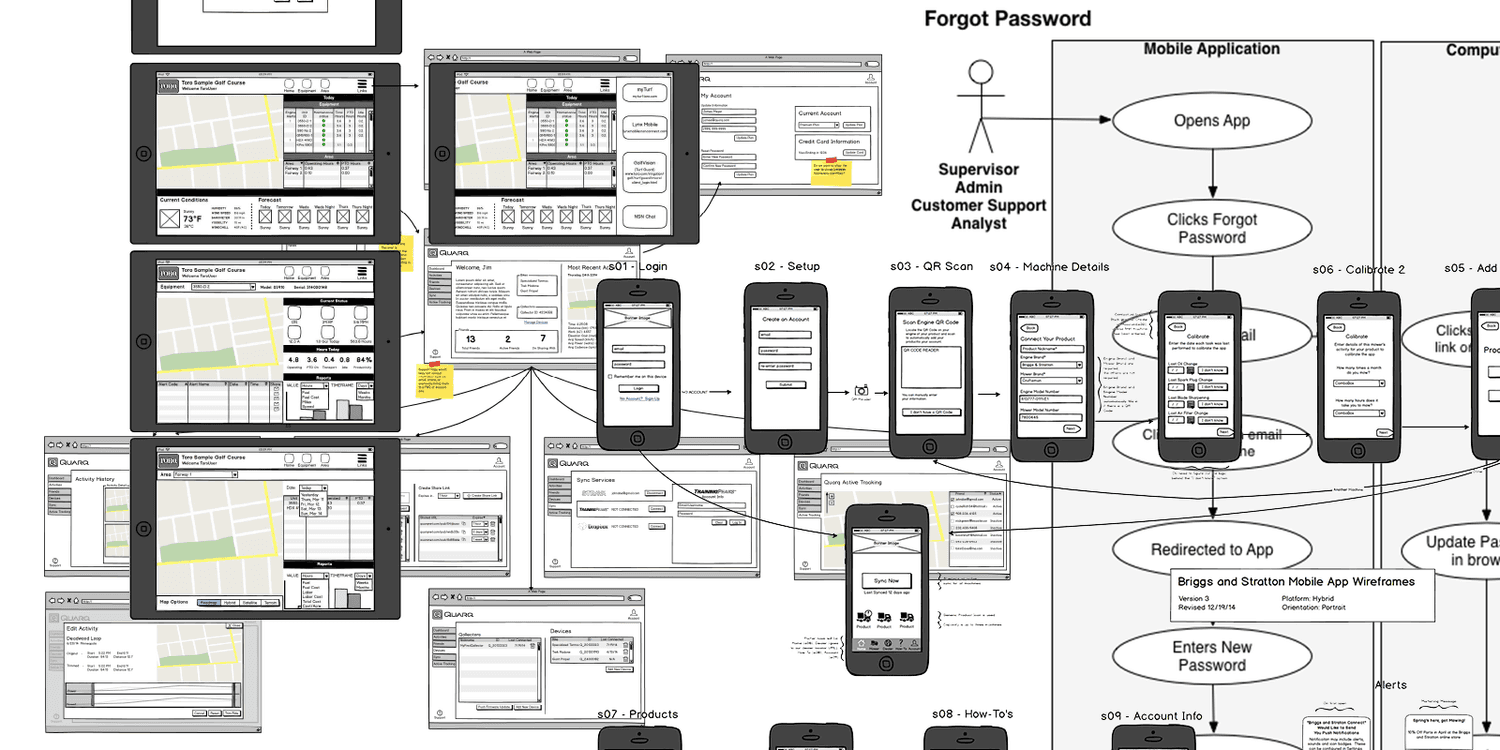
I ran structured research across client sites and remote sessions. Jobs-to-be-done interviews. Contextual inquiry where I could get it, and the cleanest research is always the kind you do standing on a factory floor watching someone actually use the thing. Brought it all back and built a unified mental model. The breakthrough was separating core platform function from the white-label presentation layer. That distinction became the architectural spine. Consistent UX engine under the hood, enough surface area on top for every client to make it feel like their own product.
The core insight: separate the engine from the paint job. Same product, different brands, no compromise.
Platform design and systems
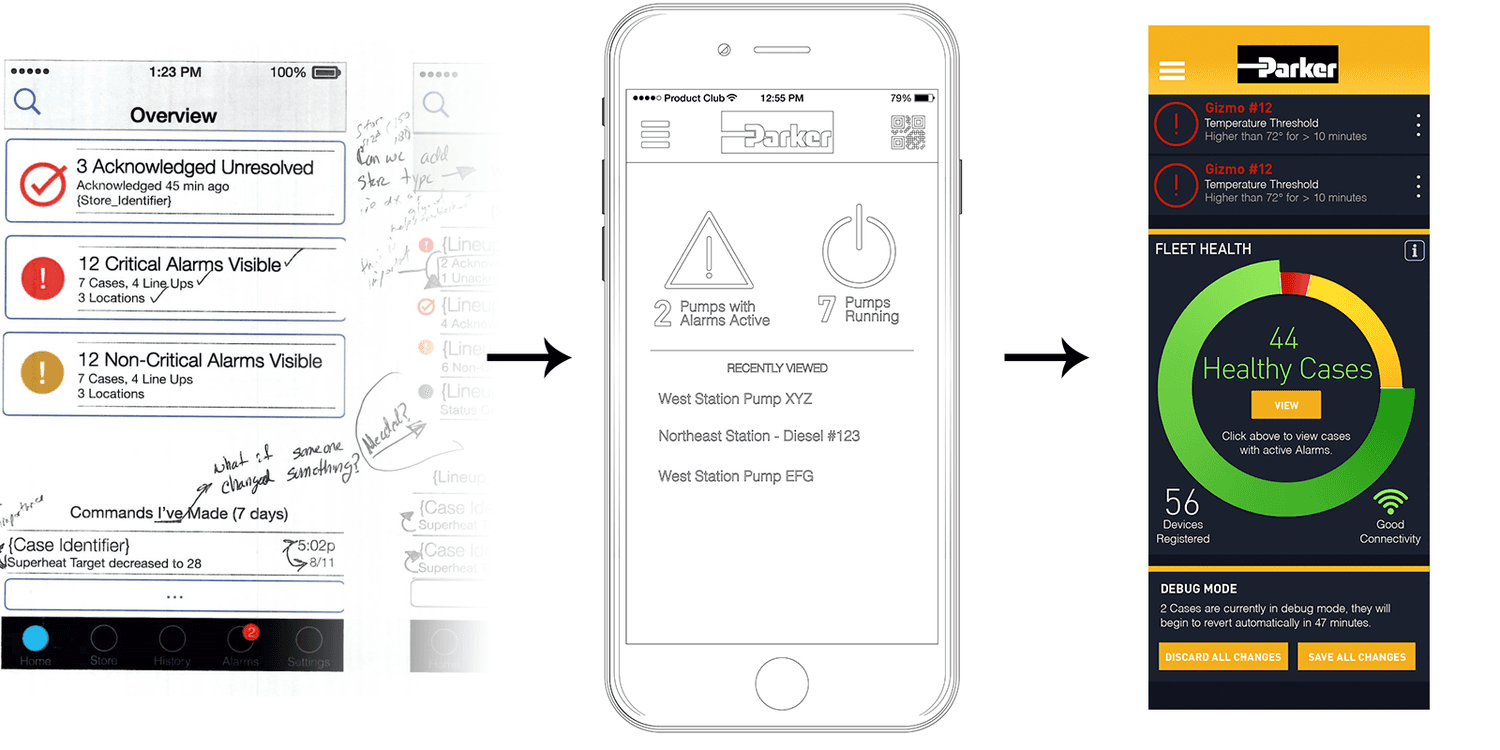
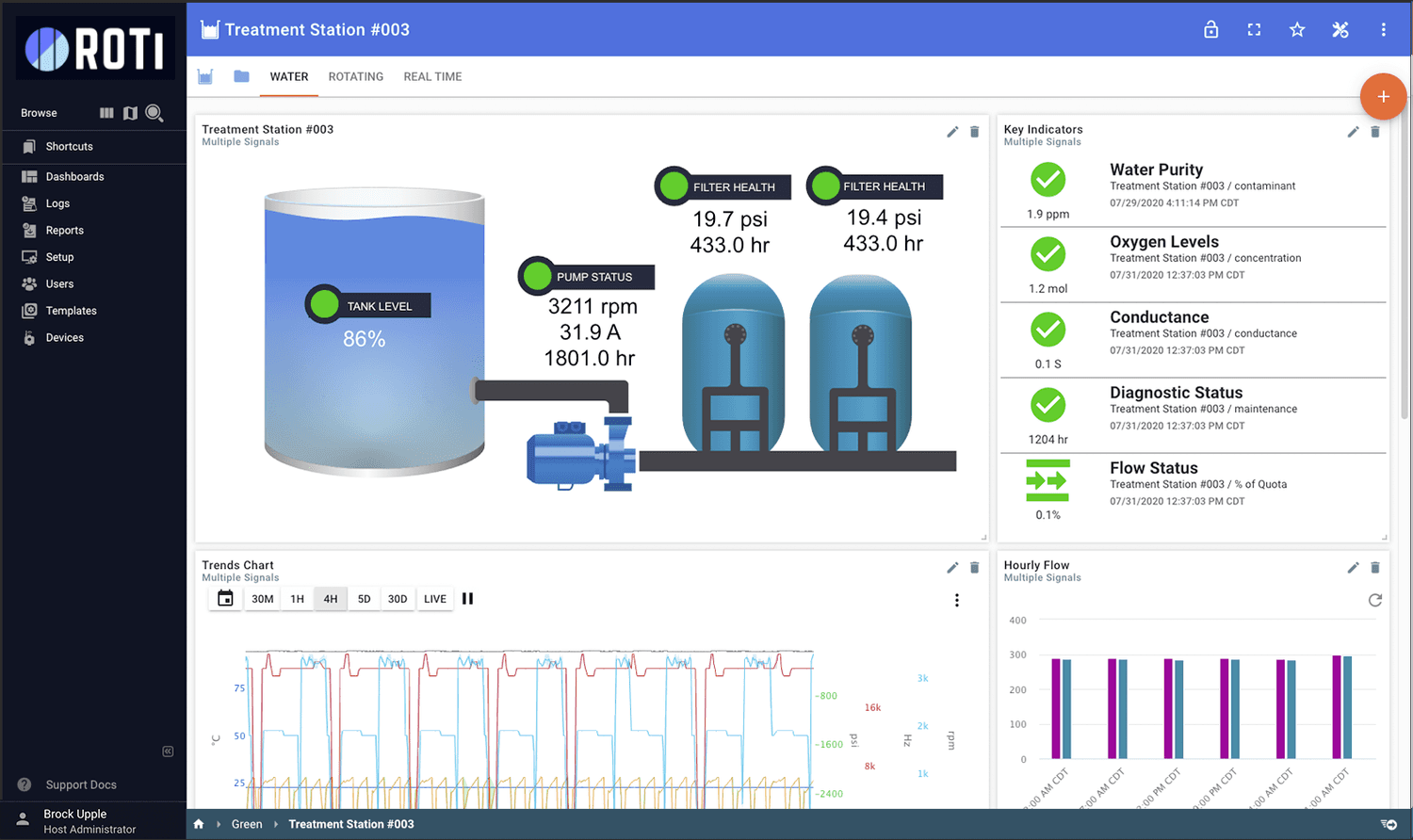
Designed the core UX for asset management, rule-based alerting, multi-tenant dashboard config, and the white-label theming system. Built the design system from scratch. Components, tokens, docs, Figma library. Wrote specs that let a single engineering team ship across every client configuration without needing UX in the room for every decision. That last part is the one that mattered. A design system that works is one that fades into the background.
Scaling the team and practice
As the product grew, so did the function. Hired and developed the team from 1 to 22. Designers paired with engineering pods. BDD scenario writing as a design artifact, not an afterthought. Sprint ceremonies that included UX at every phase, not just at the start. Reduced the handoff gap systematically. The team I built was still running those processes after I left, which is the only real measure of whether the work stuck.
Outcomes
ExoSense shipped, scaled, and stuck. Parker-Hannifin adopted it across 11 divisions, which is the largest IoT design system deployment I'm aware of at that scale. Exosite hit $1M+ quarterly recurring revenue. The product landed in Gartner's Magic Quadrant five consecutive times, which for a company that size is a real signal to enterprise buyers.
Next case study
Parker-Hannifin
Common Core