
Sovos (formerly Convey) · Lead UX Designer · 2013–2014
From 10 to 52 in twelve months.
- Problem
- Tax experts built the platform tax-form-first, while the AP teams using it think in vendors, exceptions, and deadlines. Users translated between the two on each task and lost track of progress while background processes ran. NPS sat at 10 and support tickets numbered in the thousands.
- Solution
- An IA rebuilt around the vendor lifecycle, a dashboard built on each user's next step so a clerk returning mid-filing picks up where they left off, redesigned bulk uploads, exception management, and TIN validation, with progressive disclosure keeping deep tax detail out of the daily path.
- Stack
- Discovery through user interviews, Google Analytics behavioral data, and workshops with support reps, carried from low-fidelity wireframes to production UI. Twelve months later NPS climbed 10 to 52, support costs dropped $112K a year, and qualified leads rose 5×.
TaxPort AP was a B2B compliance platform built by tax experts, not UX practitioners. It showed. NPS was 10. Support tickets were a flood. Sales were struggling to close demos because the demos kept losing the room. I rebuilt the IA from the ground up around how AP teams actually think about their work. One year later, the same product was a sales asset and a customer love letter.

10→52
NPS in 12 months
$112K
annual support cost reduction
5×
qualified lead generation lift
Context
TaxPort AP was used by accounts payable teams at mid-to-large enterprises to manage 1099 compliance, vendor tax ID validation, and year-end filing. The kind of work that has to be right or the IRS gets involved. The product had been built tax-form-first because that was the language the engineering team and the tax SMEs spoke. The users didn't speak that language. They spoke vendor and exception and deadline. The mismatch was the problem.
Research
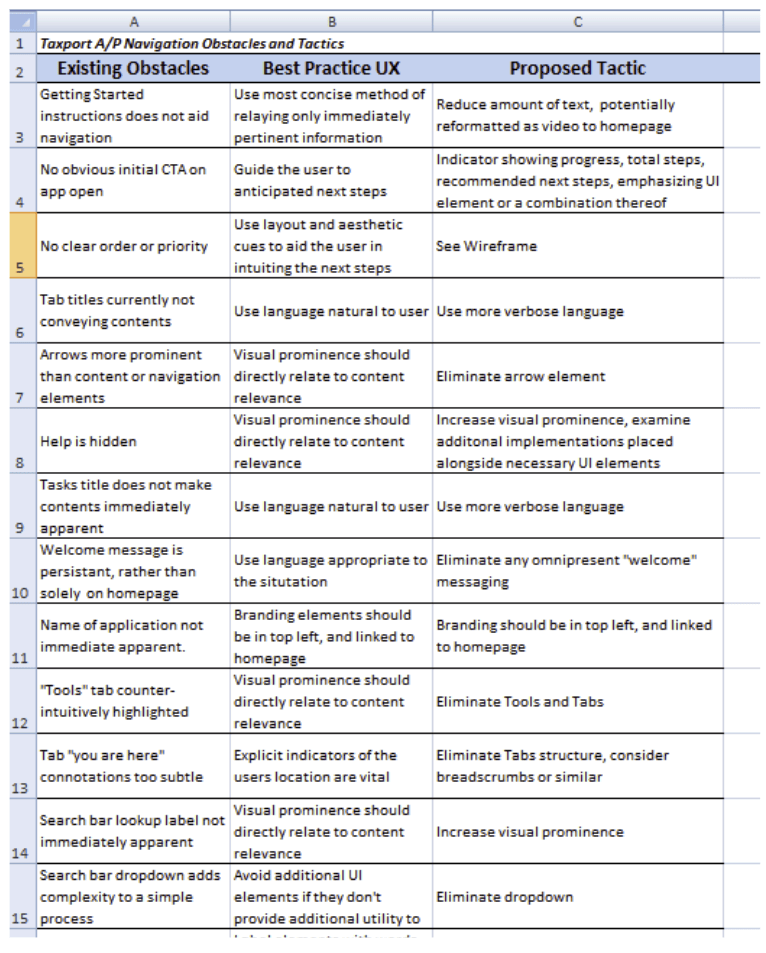
Ran discovery with the people who actually used the thing. Mostly non-technical, high-volume, deadline-driven. Phone calls, screen-share sessions, on-site visits where I could get them. The pattern emerged within a week. The IA was built on tax form logic. Users navigated by vendor. Every workflow required them to translate from how they thought back into how the system thought, which is the kind of cognitive tax that turns a 30-second task into a 5-minute one.
The product spoke tax form. The users spoke vendor. Every interaction was a translation.
From discovery to wireframe
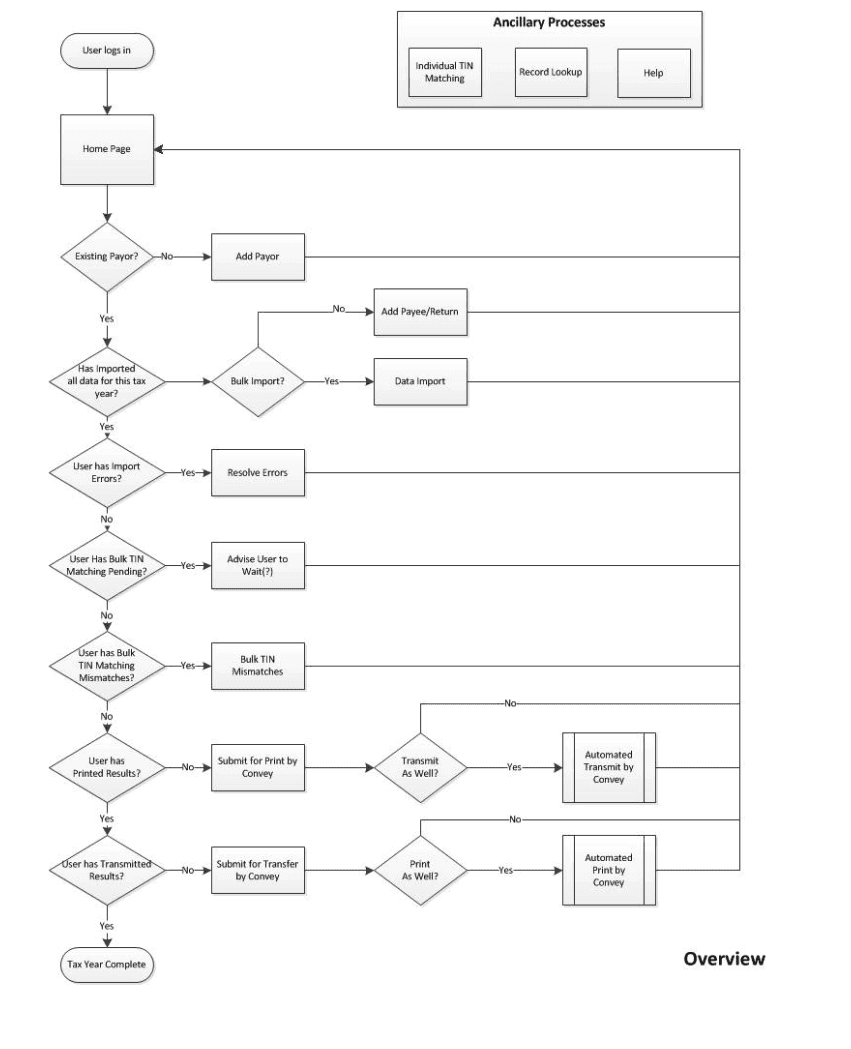
I ran user interviews, mined the Google Analytics behavioral data, and sat in workshops with the support reps who fielded the complaints. All three kept surfacing the same failure. An AP clerk would start a filing, wait a day or a week while the IRS validated the data, come back, and have no idea where they had left off. I wireframed the dashboard around each user's next step, so coming back meant continuing the work.
Redesign
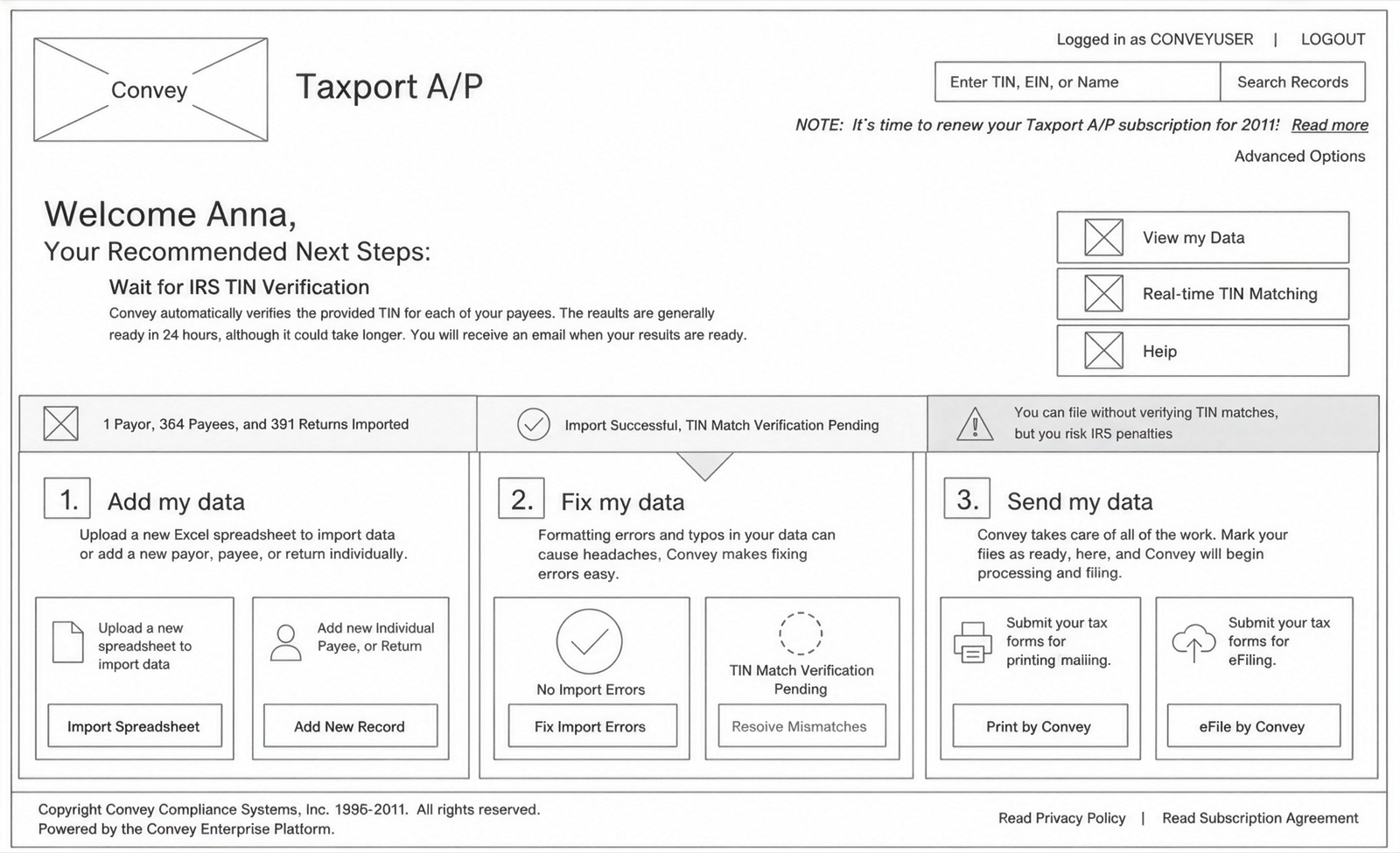
Restructured the IA around vendor lifecycle. Redesigned bulk uploads, exception management, TIN validation. Surfaced the information users needed at each step instead of making them navigate across the app to assemble context. Introduced progressive disclosure for compliance complexity, because the people who need the deep tax detail are not the same people doing the daily work and the UI shouldn't pretend otherwise.
Results
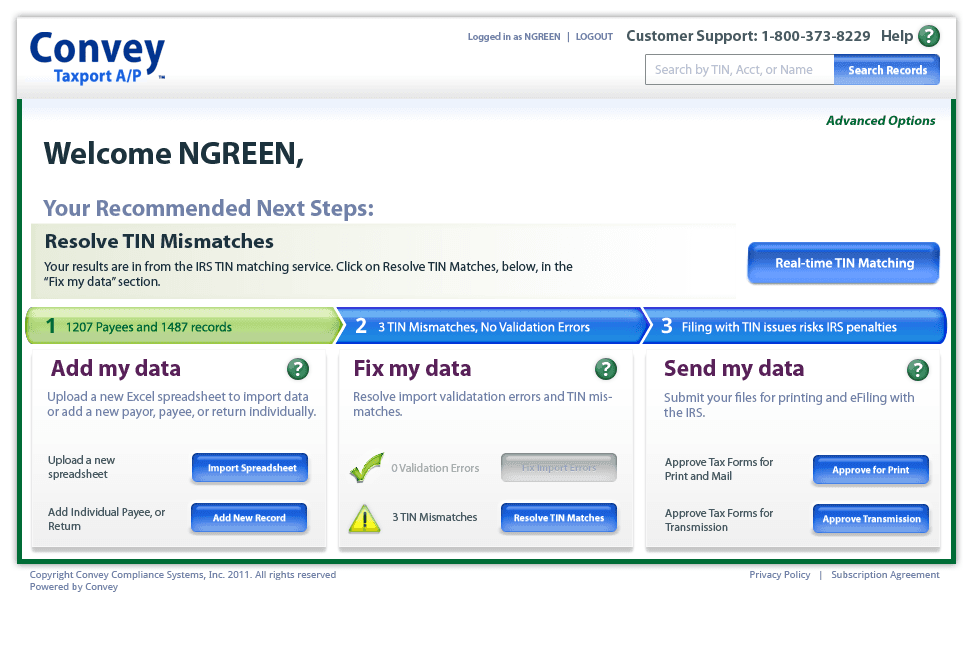
Twelve months post-launch. NPS from 10 to 52. Support costs down $112K annually against prior-year ticket volume. Marketing saw 5× improvement in qualified lead generation. The redesign became the centerpiece of every sales demo, which is the closest a UX redesign gets to a standing ovation.
“5× lead gen lift. The redesign became the demo.”