
Speculative / Portfolio · Product Design Strategist · 2026
Three pillars. Built for the way people actually buy.
- Problem
- A client wanted to put AI into the shopping experience, but most "AI shopping" still opens by asking the user a question, what do you want, when the store already knows enough to answer it.
- Solution
- Shoebox demonstrates the intersection of implicit and explicit preferences, user history, and predictive navigation, using past behavior to pre-determine highlighted products on the home page, pre-populate search, and drive an enhanced preference system.
- Stack
- A speculative UX framework, Customize, Confidence, Encourage, delivered as an interactive Figma prototype and a strategy deck, applying enterprise-platform rigor to a retail purchase journey.
Twenty years designing for systems where complexity is enormous and the margin for confusion is zero. Retail commerce is a different domain, not a different skillset. Shoebox is a speculative framework that takes platform-UX rigor into purchase-journey design. Customize. Confidence. Encourage.

Customize
predictive and explicit personalization
Encourage
behavioral nudges that respect the buyer
Remember
save user behavior and preferences via multiple methods
The client's question, and a better one
A client (name withheld) wanted to bring AI into their shopping experience. The instinct most teams follow is to bolt a chatbot onto the storefront and let it ask the shopper what they're looking for. That puts the work back on the buyer. A personal shopper that watched what someone browses, knows what they've bought, and holds their stated preferences should not greet them with a blank stare. It should arrive with a point of view. Shoebox demonstrates that alternative. It sits at the intersection of three things the store already has, purchase history, explicit preferences, and predictive navigation, and uses them to shape the experience before the shopper types a word. The home page highlights products chosen from past behavior. Search comes pre-populated. The preference system does more than store settings, it steers what the catalog shows next. The question "what do you want?" gets answered by the interface instead of asked of the customer.
The framework
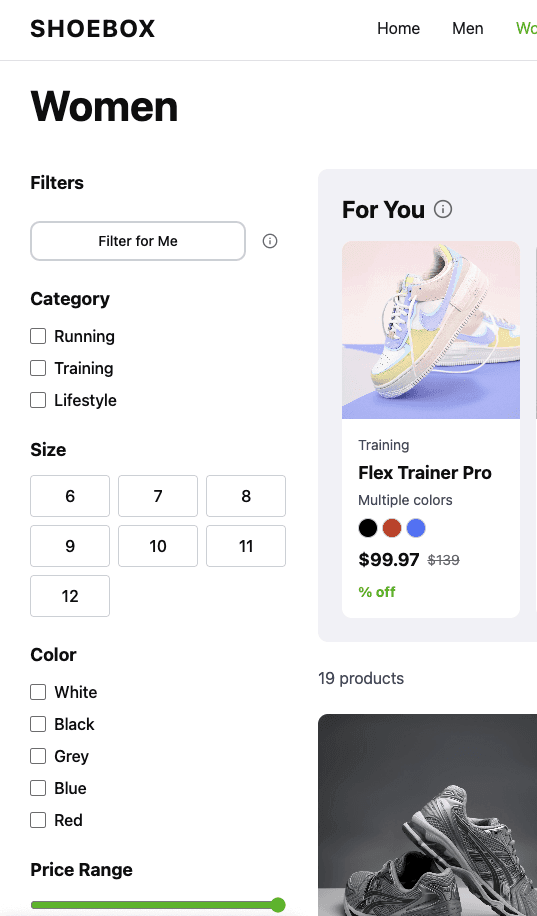
Customization, prediction and curation based on observed and explicit preferences, so the catalog feels personally curated without feeling surveilled. Confidence. Reducing purchase anxiety through social proof and intelligent insights that answer the questions buyers don't know they have. Encourage. Behavioral nudges that move buyers toward action through loyalty mechanics, recency signals, and smart cart behavior, without crossing into manipulative territory.
Key features
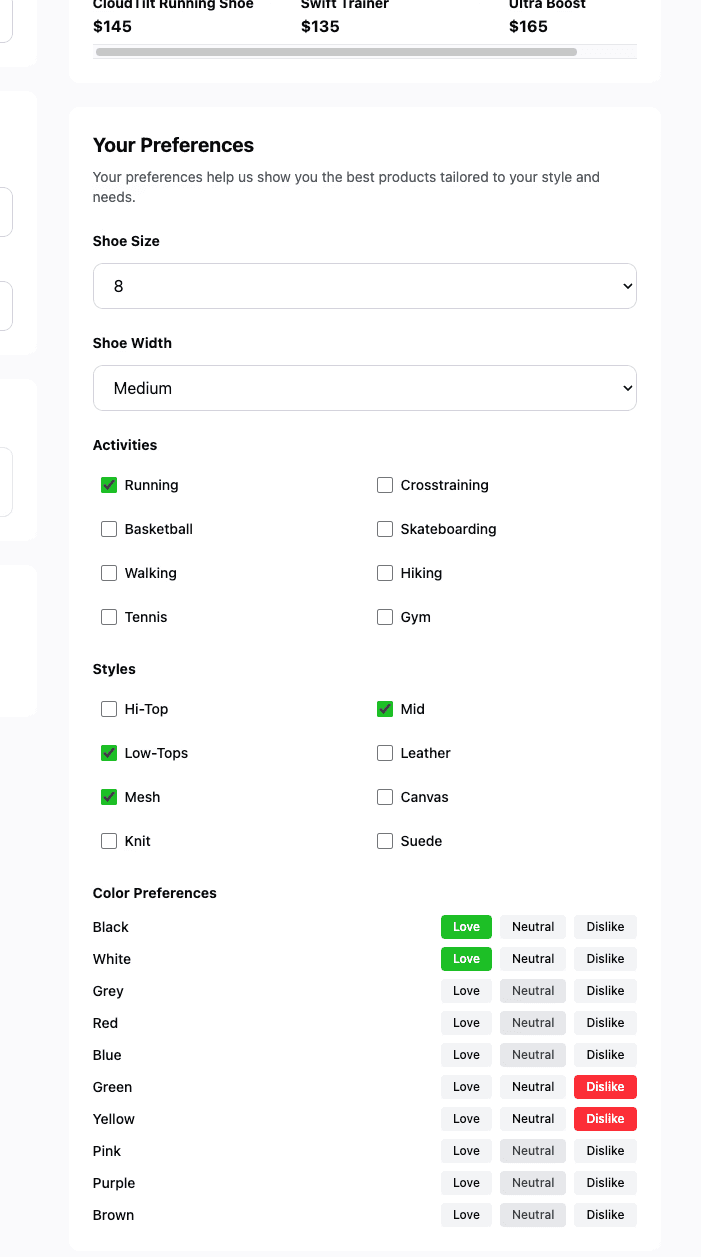
Personalized homepage and product headers segmented by user type. Limited drops for collectors. Performance gear for athletes. The same store, four different first impressions. Profile + Filter for Me, a one-tap filter that uses explicit and behavioral preferences to cut a 4,000-product catalog to the 30 that matter. AI Review Summary + Fit Data, synthesizing the long review tail into structured insights and searchable fit gauges. Loyalty Status at Checkout, a progress indicator that turns every purchase into a step toward elite status.
Approach
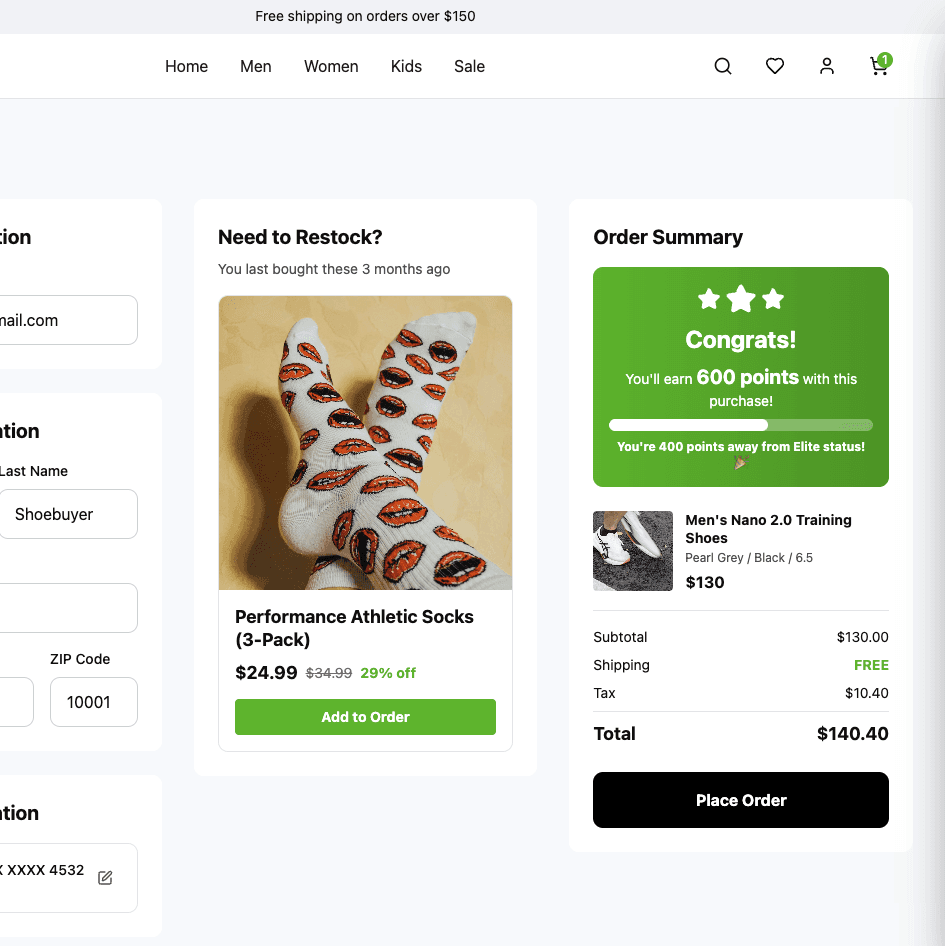
Shoebox is a point of view, not a redesign spec. The prototype is built to support strategic conversation, not passive portfolio scrolling. Delivered as an interactive Figma prototype with live interactions and a presentation deck covering the strategic rationale. The work it does is the conversation it starts.
Next case study
Solo product build
OpenSentry